
Samsung HERA W9 – How to Print an Ultrasound Photo for a Patient? Photo Printer Test
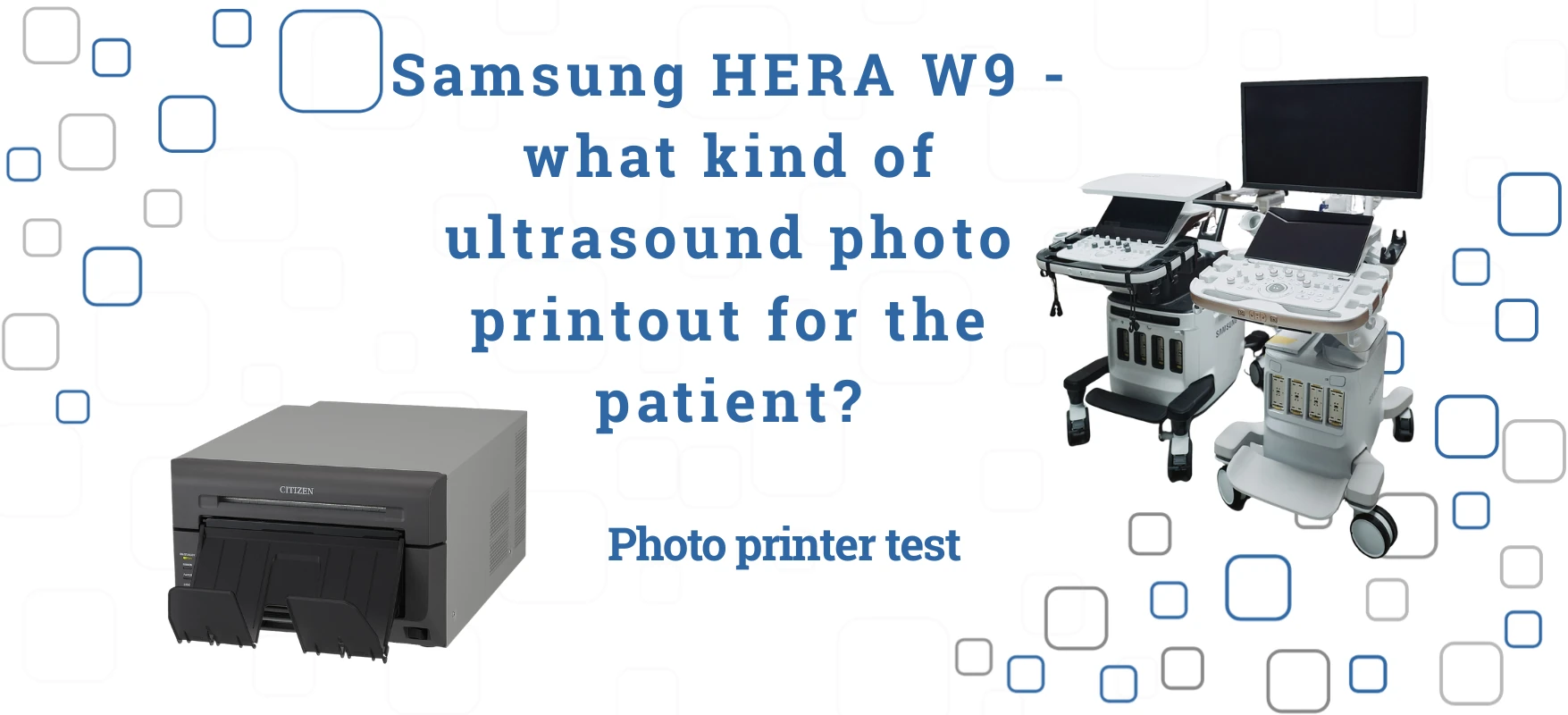
Distributors of Samsung HERA W9 ultrasound machines have a unique opportunity to expand their offerings with an element that will increase patient satisfaction and generate additional revenue – professional printing of souvenir images from the examination.
Most retailers focus on the device's technical parameters, imaging quality, and ease of use. This is a valid approach, but it overlooks one aspect that can be crucial in building a competitive advantage. Patients increasingly expect not only professional diagnostics but also high-quality souvenirs from the examination.
The problem is that the Samsung HERA W9 generates images with unusual proportions, which poses difficulties for standard printers. The result? The clinic name is truncated, the examination date disappears, and the patient receives an image that doesn't meet her expectations.
However, there is a proven solution, a solution that opens up new revenue opportunities for distributors.
Samsung HERA W9 – why it is winning the market
The Samsung HERA W9 is a device that's changing the standards in gynecology. Doctors appreciate it for its intuitive touchscreen interface, which makes even the most complex exams seamless and natural.
S-Vue technology enhances real-time imaging quality. Anatomical structures are clearer, translating into better diagnosis and greater patient confidence. CrystalLive ensures smooth images, eliminating the flickering effect that strains the eyes during long examination sessions.
Ergonomy is also crucial for practices. The compact design saves space, and quiet operation doesn't disrupt the exam atmosphere. The automatic measurement system shortens procedure time, meaning more patients per day.
But most importantly, from a business perspective, the Samsung HERA W9 generates excellent quality images. Images that patients want to take home. This is where the opportunity for distributors arises.
When a practice invests in the HERA W9, they expect a complete solution. Not just the camera, but an entire system that meets the needs of their patients. Printing images is a natural complement to this investment. An element that can bring additional income over the years of use of the camera.
Invisible potential – the emotional value of a photo
A baby's first photo isn't just a diagnostic test. It's a moment parents will remember forever. The moment they first see the outline of their little one's face, tiny hands, or profile.
For a gynecological office, a high-quality ultrasound print means much more than just additional revenue. It builds a relationship with the patient, who will return throughout the pregnancy. It also generates recommendations for friends and family.
Patients share ultrasound photos on social media, show them to family, and store them in albums. When the print quality is good, the office gains positive marketing. When the photo is blurry, cropped, or poorly framed, the effect is the opposite.
Research shows that 89% of pregnant women want a souvenir photo from their ultrasound examination. Most are willing to pay for it. This is a natural need, and fulfilling it can become an additional source of revenue for the office.
Distributors who offer a complete solution—a camera plus a dedicated printer—gain an advantage. Offices don't have to search for a separate printer, test various solutions, or worry about print quality. Everything is pre-configured and tested.
Technical Challenge: 1280×960 Aspect Ratio
The Samsung HERA W9 produces an image with a resolution of 1280x960 pixels. At first glance, this appears to be a standard format, but the devil is in the details. These proportions don't correspond to any common photographic paper format.
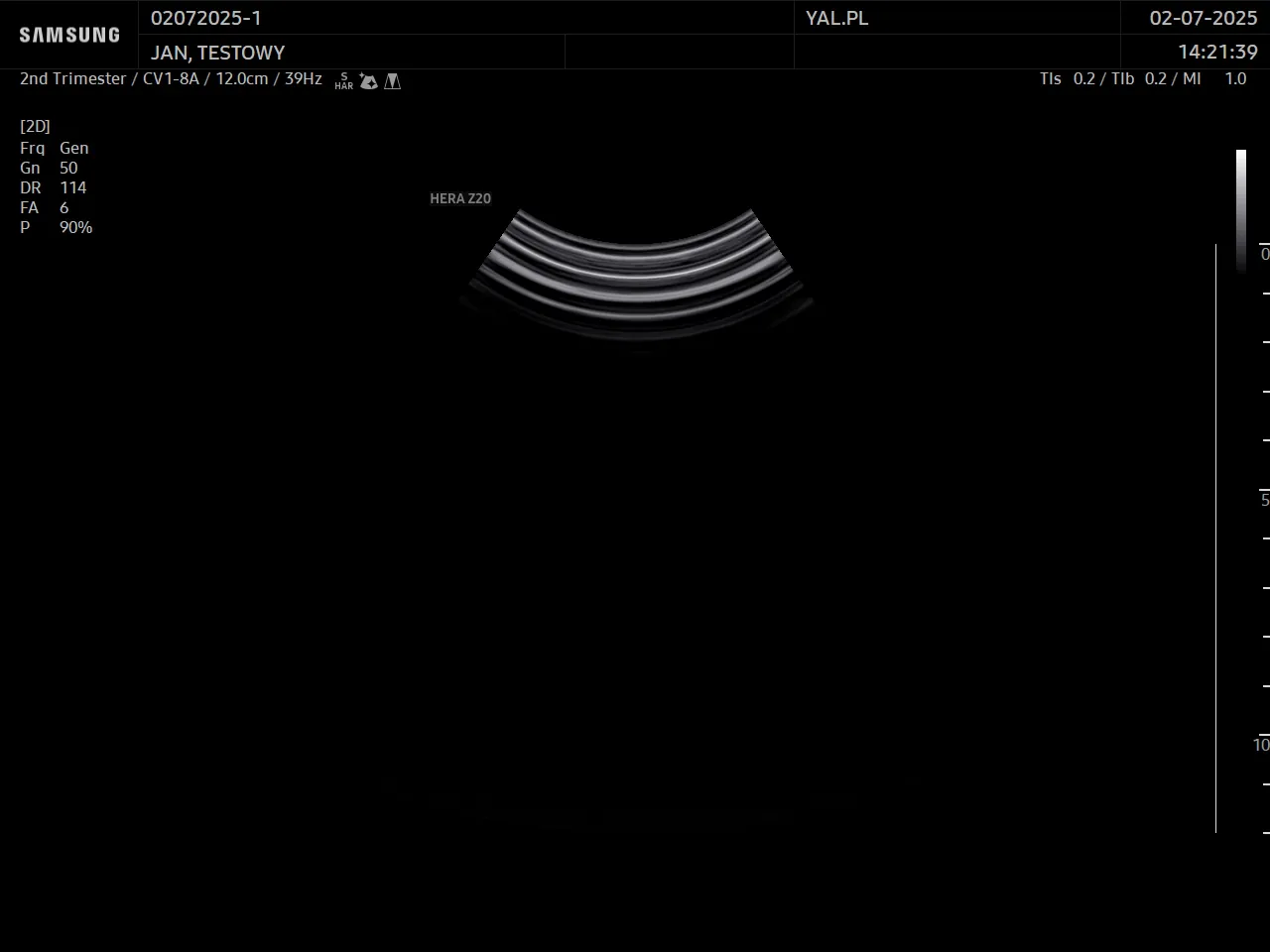
The problem arises when trying to print an image on standard 10x15 cm paper. The image must be cropped or resized, which means losing some information. The most important information is located on the edges – the name of the practice, the date of the examination, and technical parameters.
Most practices try to solve this problem by using regular office printers or entry-level photo printers. The result is disappointing. The image is either cropped or stretched disproportionately. Text becomes illegible, and the overall image looks unprofessional.
Another problem is the quality of the print itself. Ultrasound images are characterized by a specific range of grayscale and contrast. Not every printer can reproduce the subtle tonal gradations that are crucial for the readability of medical images.
For the distributor, this means that selling the device is just the beginning. The practice will then look for a solution to the printing problem. They may turn to a competitor, or they may buy a random printer that doesn't meet their expectations. Or perhaps you will offer them a ready-made, tested solution.
Practical test – cooperation with YAL from Pionki
The opportunity to test the Samsung HERA W9 in real-world conditions arose thanks to our collaboration with YAL in Pionki. This was the perfect place to see how different printers handle the images generated by this camera.
During the meeting, we made dozens of prints on various media and in various formats. Each image from the camera contained standard elements – the name of the clinic at the top, the date of the examination, technical parameters, and, of course, the main ultrasound image.
The first test with the printer and the traditional 10x15 cm media was disappointing. All key information was truncated. The clinic name disappeared, the examination date was invisible, and the patient would receive an image without any identifying information.
Subsequent attempts with different formats and settings also yielded unsatisfactory results. Either the image was truncated, or the white border around the image was too thick, which did not meet medical standards. It became clear that we needed a completely different approach.
During the tests, it became clear that the problem was not just about the aspect ratio. Ultrasound images require special treatment in terms of contrast and grayscale reproduction. Conventional photo printers, designed for vibrant colors, cannot handle the subtle tones of medical images.
This test clearly demonstrated why practices struggle with printing. And why a distributor who offers a proven solution gains a huge advantage over the competition.
Breakthrough: Citizen CX-02 + 5×7″ format
The solution arrived after just a few attempts. The Citizen CX-02 printer with 5×7″ (13×18 cm) paper proved to be a perfect match for the images from the Samsung HERA W9.
The 13×18 cm format has a key advantage – it allows for maintaining all image proportions without cropping. The clinic name remains fully visible, the examination date is legible, and all technical parameters are within the print zone.
The Citizen CX-02 is a printer designed for professional use. It uses dye-sublimation technology, which ensures print durability of 100 years. For clinics, this means patients will receive images that will not fade and will retain their quality for decades.
The grayscale reproduction quality is excellent. The Citizen CX-02 handles the subtle tones of ultrasound images perfectly, preserving all detail and contrast. The image looks professional and allows even the smallest anatomical details to be seen.
The printing time is just 15 seconds per photo. Fast enough for the patient to receive their keepsake before leaving the office. The cost per print is approximately 1 złoty, while the office might charge 20-30 złoty for it.
This solution has proven effective in practice. All the pieces of the puzzle fell into place – proportions, quality, durability, and cost-effectiveness.
Business benefits for distributors
Selling the Samsung HERA W9 with a dedicated Citizen CX-02 printer doesn't just mean a higher margin, but a competitive advantage and the possibility of additional services.
This competitive advantage is crucial. While other distributors offer only the camera, you offer a complete system. The practice doesn't have to worry about print quality, search for a separate printer, or test various solutions. This can be a deciding factor when making a purchase decision.
Additional revenue comes from additional services. Connecting the printer to the ultrasound machine, configuring the system, and training staff – these are services for which the practice will pay extra. Each such integration adds 500-1500 PLN in additional revenue.
Satisfied practices are repeat customers. When the system operates smoothly and patients receive high-quality images, the practice will return for service, technical consultations, and, in the future, for additional equipment. This builds a long-term business relationship.
You can also offer service packages – regular printer inspections, software updates, and training for new staff. Each element adds value and strengthens your market position.
Most importantly, however, you become a provider of complete solutions, not just a seller of individual devices. This change opens up new opportunities for business development.
How to start selling complete solutions
The first step is to equip your sales team with specific knowledge. Your salespeople need to understand the problem with 1280x960 aspect ratios and be able to explain why standard printers fail. This isn't complicated, but it does require preparation.
Prepare a demo kit – several printouts from different printers showing the problem and the solution. One printout with truncated text from a 10x15″ printer, the other perfect from a Citizen CX-02 on 5x7″ paper. A visual demonstration is worth more than an hour of explanation.
During presentations in the office, focus on the benefits for patients, not the technical details. The office will buy a solution that makes its clients happy and generates additional revenue. Technical arguments are important, but emotions drive the purchase.
Prepare an ROI calculation for the office. Show how quickly the printer pays for itself with 15-20 photos per day. If the office charges 25 złoty per photo and the printing cost is one złoty, the return on investment is achieved in a few months.
Offer a starter package – a camera, printer, initial paper supplies, and user training. The office receives everything in one order, and you gain additional services to bill.
Build long-term relationships. After installation, regularly check the system's performance. Offer updates, additional training, and new materials. A satisfied customer is your company's best ambassador.
The Samsung HERA W9 with the Citizen CX-02 printer is not just an excellent technical solution. It's an opportunity to transform your business – from selling devices to providing complete systems.
Distributors who recognize this potential first will gain an advantage that the competition won't be able to quickly catch up to. Patients will be satisfied, practices will gain a new source of revenue, and you will build stronger business relationships.
Isn't this exactly what you're looking for in your industry?